
The 2007 ICC World Twenty20 marked the beginning of a new era in international cricket. T20 cricket was still relatively young, and many teams were learning how to approach the fast-paced format. India entered the tournament with a young squad and a new captain, MS Dhoni, but few could have predicted that they would become the first-ever T20 world champions.India Become the First T20 World Champions
India’s historic journey culminated on 24 September 2007, when they defeated Pakistan by five runs in the final at Johannesburg. India scored 157/5, with Gautam Gambhir producing an outstanding 75 from 54 balls. Pakistan were eventually dismissed for 152, giving India the inaugural World Twenty20 title.
The victory was important not only because it gave India their first T20 world title but also because it helped establish T20 cricket as a major force in the global game.
The Beginning of the T20 World Cup
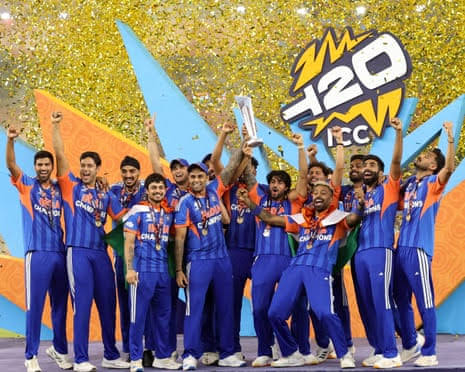
The first ICC World Twenty20 was played in South Africa in 2007. It was the first major global tournament dedicated entirely to the T20 international format.India Become the First T20 World Champions
India did not send several established senior players, including Sachin Tendulkar, Sourav Ganguly and Rahul Dravid. Instead, the selectors trusted a young group of players led by MS Dhoni.
The squad included talented players such as Gautam Gambhir, Virender Sehwag, Yuvraj Singh, Rohit Sharma, Irfan Pathan, RP Singh and Harbhajan Singh.
Dhoni’s leadership quickly became one of the tournament’s defining stories.
India’s First Match Against Pakistan
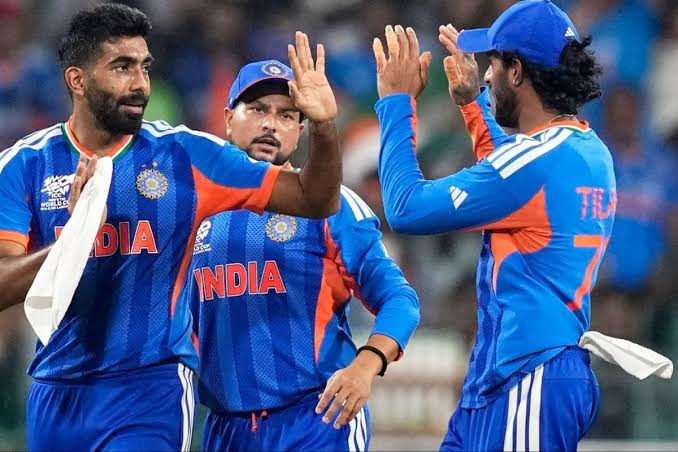
India’s first major challenge came against Pakistan in Durban on 14 September 2007.
India scored 141/9, while Pakistan also finished on 141/7 after 20 overs. Because the scores were tied, the match was decided by a bowl-out, an unusual method that was used at the time to determine the winner.
India won the bowl-out after their bowlers successfully hit the stumps while Pakistan failed to hit the target with their attempts.
The victory gave India valuable momentum and demonstrated that the young Indian team could handle pressure against one of their biggest rivals.
Yuvraj Singh’s Six Sixes
One of the most unforgettable moments of India’s campaign came against England.
On 19 September 2007, Yuvraj Singh produced one of the most explosive innings in T20 history. Facing Stuart Broad, he hit six consecutive sixes in one over.
Yuvraj also reached his half-century from only 12 balls, setting a remarkable record at the time. His incredible hitting helped India post a huge total and became one of the iconic moments of the inaugural tournament.
The performance established Yuvraj as one of the biggest stars of the new T20 format and gave India enormous confidence heading into the knockout stages.
India’s Road to the Final
India continued their impressive campaign after the group stage.
The young team showed excellent balance. The batting lineup could attack from the first over, while the bowling attack contained both pace and spin options.
Gautam Gambhir became an important run-scorer at the top of the order. Yuvraj Singh provided explosive batting in the middle overs, while Rohit Sharma showed glimpses of the talent that would later make him one of India’s greatest limited-overs players.
The bowling attack was led by RP Singh, Irfan Pathan and Harbhajan Singh.
India’s ability to stay calm under pressure became particularly important during the knockout stages.
The Final: India vs Pakistan
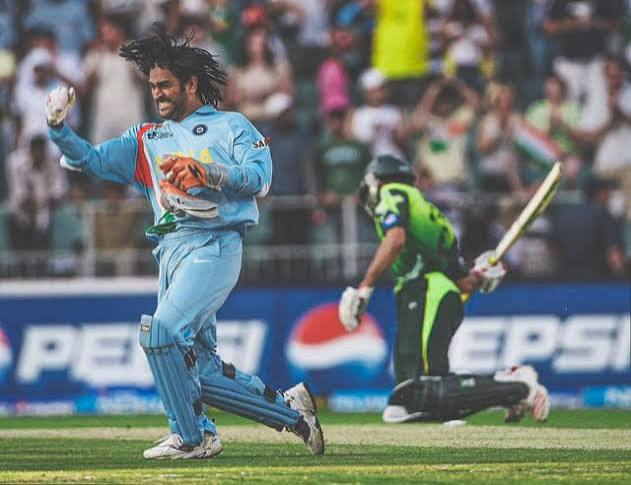
The final was played at the New Wanderers Stadium in Johannesburg on 24 September 2007.
India won the toss and chose to bat first.
Pakistan’s bowling attack created pressure early, but Gautam Gambhir played an outstanding innings. He scored 75 runs from 54 deliveries, providing the foundation for India’s total.
Rohit Sharma also contributed a valuable unbeaten 30 from 16 balls, helping India accelerate toward the end of the innings. India eventually finished on 157/5.
At the time, 157 looked competitive rather than unbeatable. India therefore needed disciplined bowling and fielding to defend the total.
Pakistan’s Chase
Pakistan began their chase under pressure.
India’s bowlers struck regularly, and Pakistan slipped to 77/6 after 11.4 overs. The match appeared to be moving strongly in India’s favour.
However, Pakistan’s Misbah-ul-Haq refused to give up.
Misbah played a crucial innings and received support from players including Yasir Arafat and Sohail Tanvir. His presence transformed the match from a comfortable Indian position into a tense final-over contest.
With one wicket remaining, Pakistan required 13 runs from the final over.
Dhoni’s Brave Captaincy Decision
The final over became one of the most famous moments in Indian cricket.
MS Dhoni decided to give the ball to Joginder Sharma, an inexperienced bowler at international level.
The decision surprised many observers because India had other bowling options. However, Dhoni trusted his instinct and gave Sharma the responsibility of defending the total.
Joginder’s first delivery was a wide.
The pressure increased immediately.
Misbah then hit the next delivery for a six, dramatically reducing the equation. Pakistan were suddenly within reach of the championship.
The situation had become extremely tense.
The Final Ball
Pakistan needed only a few runs to win when Misbah attempted a scoop shot over fine leg.
The ball did not clear the fielder.
Instead, Sreesanth took the catch, ending Pakistan’s innings at 152.
India won the final by five runs and became the first-ever T20 world champions.
The moment immediately became one of the most famous endings in World Cup history.
For India, it was the beginning of a new chapter.
Gautam Gambhir’s Match-Winning Contribution
Gautam Gambhir was India’s leading batter in the final.
His 75 from 54 balls was crucial because India lost wickets at regular intervals. Gambhir continued attacking despite the pressure of the final and ensured that India had a defendable total.
His innings contained a mixture of aggressive stroke play and intelligent batting.
The knock remains one of the most important innings in India’s T20 World Cup history because it came in the tournament’s first final.
MS Dhoni’s Leadership
MS Dhoni’s leadership was perhaps the biggest story of the tournament.
He had been appointed captain of a young Indian team, and the decision initially attracted attention because Dhoni had limited captaincy experience.
However, he quickly demonstrated his ability to remain calm in difficult situations.
His decision-making throughout the tournament was impressive. The final over against Pakistan became the clearest example of his confidence in his players.
Giving Joginder Sharma the final over required enormous trust. The decision ultimately worked and became a defining moment of Dhoni’s captaincy career.
The Importance of Rohit Sharma
The 2007 tournament was also an early glimpse of Rohit Sharma’s international career.
Rohit was still a young player at the time and had not yet become the established superstar he would later become.
His unbeaten 30 from 16 balls in the final provided India with the late acceleration they needed.
Years later, Rohit would become one of the most successful T20I batters and captains in international cricket.
His presence in India’s first T20 World Cup-winning team makes the 2007 title an important part of his career story.
India’s Bowling Performance
India’s bowlers played a crucial role in the final.
RP Singh and Irfan Pathan both took three wickets during the match, helping India disrupt Pakistan’s batting lineup.
Pakistan’s middle and lower order struggled to build a stable partnership until Misbah-ul-Haq attempted to rescue the innings.
The Indian bowlers maintained enough pressure to take the match into the final over, where the dramatic final wicket secured victory.
Why the Victory Was Historic
India’s 2007 triumph was significant for several reasons.
First, India became the first team to win the ICC World Twenty20.
Second, they achieved the title with a young squad that had limited experience in international T20 cricket.
Third, they defeated Pakistan in a dramatic final, making the championship even more memorable.
The victory also helped demonstrate the commercial and entertainment potential of T20 cricket. The tournament showed that international cricket could produce high drama within only a few hours.
The ICC later described the 2007 final as one of the defining moments that helped give T20 cricket the explosive global momentum it enjoys today.
Impact on Indian Cricket
The 2007 victory had a huge impact on Indian cricket.
The success increased interest in T20 cricket among Indian fans. It also contributed to the rapid growth of domestic T20 competitions.
The following year, the Indian Premier League was launched, creating one of the world’s biggest professional T20 tournaments.
Many players from India’s 2007 squad became important figures in the new T20 era.
MS Dhoni became one of the most successful captains in cricket history, while players such as Yuvraj Singh, Gautam Gambhir, Rohit Sharma and Irfan Pathan continued to play major roles for India.
A Turning Point for T20 Cricket
The 2007 World Twenty20 was more than another international tournament.
It helped change the way cricket was viewed.
Traditional cricket had long been dominated by Tests and ODIs. T20 cricket introduced a shorter, faster format that demanded aggressive batting, creative bowling, athletic fielding and innovative captaincy.
India’s victory in the inaugural tournament helped establish the format in one of cricket’s biggest markets.
The success of T20 cricket subsequently led to the development of major domestic leagues around the world.
Legacy of the 2007 Champions
The legacy of India’s 2007 triumph remains strong.
The team showed that youth, fearless cricket and intelligent leadership could overcome more experienced opponents.
The victory also introduced a new generation of Indian cricket fans to the excitement of T20 international cricket.
Most importantly, it established MS Dhoni as a captain capable of handling enormous pressure. His calm personality and bold tactical decisions would later become defining characteristics of his career.
The final against Pakistan remains particularly memorable because the championship was decided by only five runs.
Conclusion
India’s victory in the 2007 ICC World Twenty20 final was one of the most important moments in the history of Indian cricket. On 24 September 2007, India defeated Pakistan by five runs at Johannesburg to become the first-ever T20 world champions.
Gautam Gambhir’s brilliant 75 gave India a strong foundation, while Rohit Sharma’s late hitting helped India reach 157/5. India’s bowlers then fought back after Pakistan threatened to chase down the target.
The decisive moment came in the final over. MS Dhoni trusted Joginder Sharma with the ball, and Misbah-ul-Haq’s attempted scoop ended with Sreesanth taking the winning catch.
The five-run victory created an unforgettable sporting moment and helped establish T20 cricket as a major force in international cricket.
India’s 2007 triumph was therefore much more than a trophy. It was the beginning of India’s remarkable T20 World Cup story and a turning point that helped shape the modern era of cricket.
5 Q&A: India Become the First T20 World Champions
1. When did India become the first T20 World Champions?
India became the first T20 World Champions on September 24, 2007, when they defeated Pakistan by five runs in the inaugural ICC World Twenty20 final in Johannesburg.
2. Who was India’s captain in the 2007 T20 World Cup?
MS Dhoni was India’s captain during the inaugural T20 World Cup. His calm leadership and bold decisions played a major role in India’s historic title victory.
3. Who was India’s top scorer in the 2007 T20 World Cup final?
Gautam Gambhir was India’s leading scorer in the final. He made 75 runs from 54 balls, providing the foundation for India’s total of 157/5.
4. How did India beat Pakistan in the 2007 T20 World Cup final?
India scored 157/5 before restricting Pakistan to 152 all out. Joginder Sharma bowled the final over, and Sreesanth caught Misbah-ul-Haq to seal India’s five-run victory.
5. Who hit six sixes in an over during the 2007 T20 World Cup?
Yuvraj Singh hit six consecutive sixes off Stuart Broad in India’s match against England. He also reached his fifty from just 12 balls, creating one of the most memorable moments in T20 World Cup history.